
目次
- 今回は、医学的視点より日本食のメリットとデメリットについてまとめます。 現代医学が明かす「2つのキーワード」 コラムの本題に入る前に、まずは食事療法の前提を変えた2つの現代医学概念を整理しておきましょう。
- 「日本食」のメリット
- 伝統ゆえの盲点? 日本食のデメリットと対策
- インクレチン分泌を最大化する「理想の食べる順番」
- 2. 各ステップの具体的な役割とメニューの組み合わせ
- 3. インクレチン分泌を高める「最強の和食御膳」メニュー例
- 結び:我慢から「賢い選択」の時代へ
- The New Frontier: Hormones Over Calories
- The Incretin Engine: The Biological Perks of Washoku
- The Stealth Risks: Deconstructing the Washoku Illusion
- The precise cellular and physiological mechanism of the ‘carbohydrate-last’ or ‘veggie-first’ eating sequence, and how it optimizes GLP-1 secretion.
- 1. Gastric Emptying Rate: The Mechanical Brake
- 2. Cellular Mechanism of Enhanced GLP-1 Secretion
- 3. The Downstream Cascade: Mitigating Beta-Cell Stress
- Summary of Clinical Outcomes
- A practical 3-day Japanese-style meal plan
- Day 1: The Coastal Incretin Starter
- Day 2: The Umami & Fermentation Sync
- Day 3: The Deep-Sea Satiety Protocol
- Conclusion: The Era of Smart Selection
今回は、医学的視点より日本食のメリットとデメリットについてまとめます。
現代医学が明かす「2つのキーワード」コラムの本題に入る前に、まずは食事療法の前提を変えた2つの現代医学概念を整理しておきましょう。
今回は、医学的視点より日本食のメリットとデメリットについてまとめます。
コラムの本題に入る前に、まずは食事療法の前提を変えた2つの現代医学概念を整理しておきましょう。
- 緩やかな糖質制限(ロカボ) 極端なゼロ糖質ではなく、1食あたりの糖質量を20〜40g(+間食10g、1日トータル70〜130g)に収める極めて現実的なアプローチです。食後の血糖スパイク(急激な血糖値の上昇)を抑えつつ、エネルギー源としての糖質も適度に残すため、長続きするのが特徴です。
-
インクレチンホルモン(GLP-1 / GIP) 食事が小腸を通る際に分泌されるホルモンです。膵臓を刺激してインスリン(血糖値を下げるホルモン)の分泌を促すだけでなく、脳に働いて満腹感を高めたり、胃の動きを緩やかにして満腹感を長持ちさせたりする役割を持っています。
現代の食事療法は、単に「食べる量を減らす」のではなく、「いかにインクレチンを味方につけ、血糖値を乱高下させずに満腹感を得るか」という質的なアプローチへと進化しています。
「日本食」のメリット
一見、白米(炭水化物)中心に見える日本食ですが、実は現代の「ロカボ」「インクレチン」の視点から見ると、非常に優れたポテンシャルを秘めています。
1. 「セカンドミール効果」を生む豊富な水溶性食物繊維
和食に欠かせない海藻(ワカメ、ヒジキ)、キノコ、大豆製品、こんにゃく、根菜類には水溶性食物繊維がたっぷり含まれています。 これらは腸内環境を整えるだけでなく、糖質の吸収を緩やかにしてインクレチン(特に対策が難しい食後のGLP-1)の分泌をジワジワと持続させます。この効果は次の食事の血糖値上昇まで抑える「セカンドミール効果」を生み出します。
2. 「不飽和脂肪酸」によるインクレチン分泌の刺激
サバやイワシなどの青魚に豊富なEPA・DHA(オメガ3不飽和脂肪酸)は、小腸を直接刺激してインクレチンの分泌を促すことがわかっています。肉類の飽和脂肪酸に比べて血管に優しく、満腹シグナルを早く脳に届けてくれるため、自然とドカ食いを防げます。
3. 主食の「冷まし食べ」という裏ワザ(レジスタントスターチ)
日本食には、お寿司や冷や奴のトッピング、お弁当など、少し冷めた状態で炭水化物を摂る文化があります。お米は冷めることで、糖質でありながら食物繊維と同じような働きをする「レジスタントスターチ(難消化性デンプン)」に変化します。これにより、ロカボの基準をクリアしやすくなります。
伝統ゆえの盲点? 日本食のデメリットと対策
一方で、伝統的な日本食をそのまま盲信するだけでは、現代の糖尿病・肥満症治療としては不十分です。以下の「罠」には注意が必要です。
1. 「隠れ糖質」による血糖スパイク
和食の基本調味料である「みりん」「砂糖」「市販のめんつゆ」には、多くの糖質が含まれています。煮物、照り焼き、酢の物などは、良質なタンパク質や野菜を摂っているつもりでも、実は味付けによってロカボの許容量をオーバーしてしまうことが少なくありません。
【対策】 調味料にラカントなどの天然由来の甘味料を取り入れる、出汁(ダシ)の旨味を効かせて砂糖を減らす、といった工夫が効果的です。
2. 塩分の過剰摂取による「肥満・代謝悪化」の加速
和食の最大の弱点は塩分です。味噌汁、漬物、干物、醤油の多用は、高血圧のリスクを高めるだけでなく、実は味覚を刺激して白米(糖質)を欲する原因になります。塩分過多は肥満や代謝異常とも密接に関わっていることが近年の研究で指摘されています。
【対策】 味噌汁は具だくさんにして汁の量を減らす、減塩醤油やレモン・すだちの酸味を活用するなどのシフトが必要です。
3. 「丼もの・麺類」の一品料理化
うどん、和風パスタ、牛丼といった「一品ものの和食」は、メリットであるはずの食物繊維や魚の脂が抜け落ち、純粋な「高糖質・高塩分」の塊になってしまいます。これではインクレチンが有効に働く前に血糖値が暴走してしまいます。
インクレチン分泌を最大化する「理想の食べる順番」
和食はもともと「一汁三菜」という優れた構造を持っていますが、その食べる順番( nutrient sequencing )を最適化することで、体内のインクレチン分泌を最大化し、食後の血糖スパイクを劇的に抑えることが可能です。
基本ルールは 【 食物繊維(副菜・汁物) ➔ タンパク質・脂質(主菜) ➔ 炭水化物(主食) 】 です。各ステップの間は、少なくとも3〜5分、理想的には主食までに10分以上の時間をかけることで、消化管ホルモンが効果的に働き始めます。
【ステップ1】食物繊維 (食物繊維ファースト)
 ▼(3〜5分置く:小腸へのバリア形成と上部消化管の通過遅延)
【ステップ2】タンパク質・脂質 (インクレチン・インジェクション)
 ▼(5〜10分置く:L細胞・K細胞を直接刺激し、GLP-1/GIPを先行分泌)
【ステップ3】炭水化物 (カーボ・ラスト)
 (すでに分泌されたインクレチンと遅くなった胃排泄により、糖質が極めて緩やかに吸収される)
2. 各ステップの具体的な役割とメニューの組み合わせ
【ステップ1:食物繊維】胃の動きをスローダウンさせ、糖の吸収を阻害する
最初に入れるべきは、「水溶性食物繊維」を豊富に含む食材です。これらは水分を吸ってゼリー状になり、後から入ってくる糖質を包み込んで吸収を遅らせます。また、大腸に届いた食物繊維が短鎖脂肪酸(SCFA)へ代謝されることで、持続的なGLP-1分泌を促します。
-
おすすめの和食メニュー:
-
めかぶ・もずく酢: ぬめり成分(フコイダン)が強力な糖質バリアになります。酢に含まれる酢酸も胃排泄を遅らせるため相乗効果があります。
-
具だくさん味噌汁(ワカメ、なめこ、オクラなど): ネバネバ系の食材は水溶性食物繊維の塊です。
-
海藻とキノコの白和え: 食物繊維と、豆腐の植物性タンパク質を同時に摂取できます。
-
【ステップ2:タンパク質・脂質】L細胞を直接刺激してGLP-1を先行分泌させる
食物繊維のバリアを作ったら、次にメインの肉や魚、大豆製品(主菜)を食べます。 小腸のL細胞は、脂肪分解物(脂肪酸)やアミノ酸を感知すると、ダイレクトにGLP-1を血中に放出します。特にオメガ3多価不飽和脂肪酸(EPA・DHA)は、L細胞の受容体(GPR120/FFA4など)への親和性が高く、強力なGLP-1分泌促進シグナルとなります。
-
おすすめの和食メニュー:
-
青魚の塩焼き(サバ、イワシ、サンマ): EPA・DHAの宝庫であり、インクレチン分泌における最強の主菜です。
-
お刺身盛り合わせ(マグロ中トロ、サーモンなど): 加熱によるオメガ3の流出がないため、効率よく脂質を摂取できます。
-
鶏肉と豆腐のつくね(タレは砂糖・みりん不使用): 良質なアミノ酸がインスリン分泌を直接刺激し、GLP-1分泌もサポートします。
-
【ステップ3:炭水化物】すでに準備が整った体内へ、ゆっくり糖質を迎え入れる
最後に白米などの主食(炭水化物)を摂ります。この段階に達したときには、ステップ1・2の効果によって胃の運動が十分に抑制されており(胃排泄の遅延)、さらに膵臓では「インスリンを出す準備」が整っています。そのため、お米を食べても血糖値が急上昇(スパイク)せず、なだらかな曲線を描くようになります。
-
ロカボ・インクレチンを意識した主食の工夫:
-
冷やご飯、または冷ましたおむすび: お米は冷めることで「レジスタントスターチ(難消化性デンプン)」が増加し、食物繊維と同様に大腸のL細胞を刺激する材料に変わります。
-
麦飯(大麦・もち麦ブレンド)や玄米: 主食そのものにも水溶性食物繊維(-グルカン)を混ぜることで、カーボ・ラストの効果をさらに補強します。
-
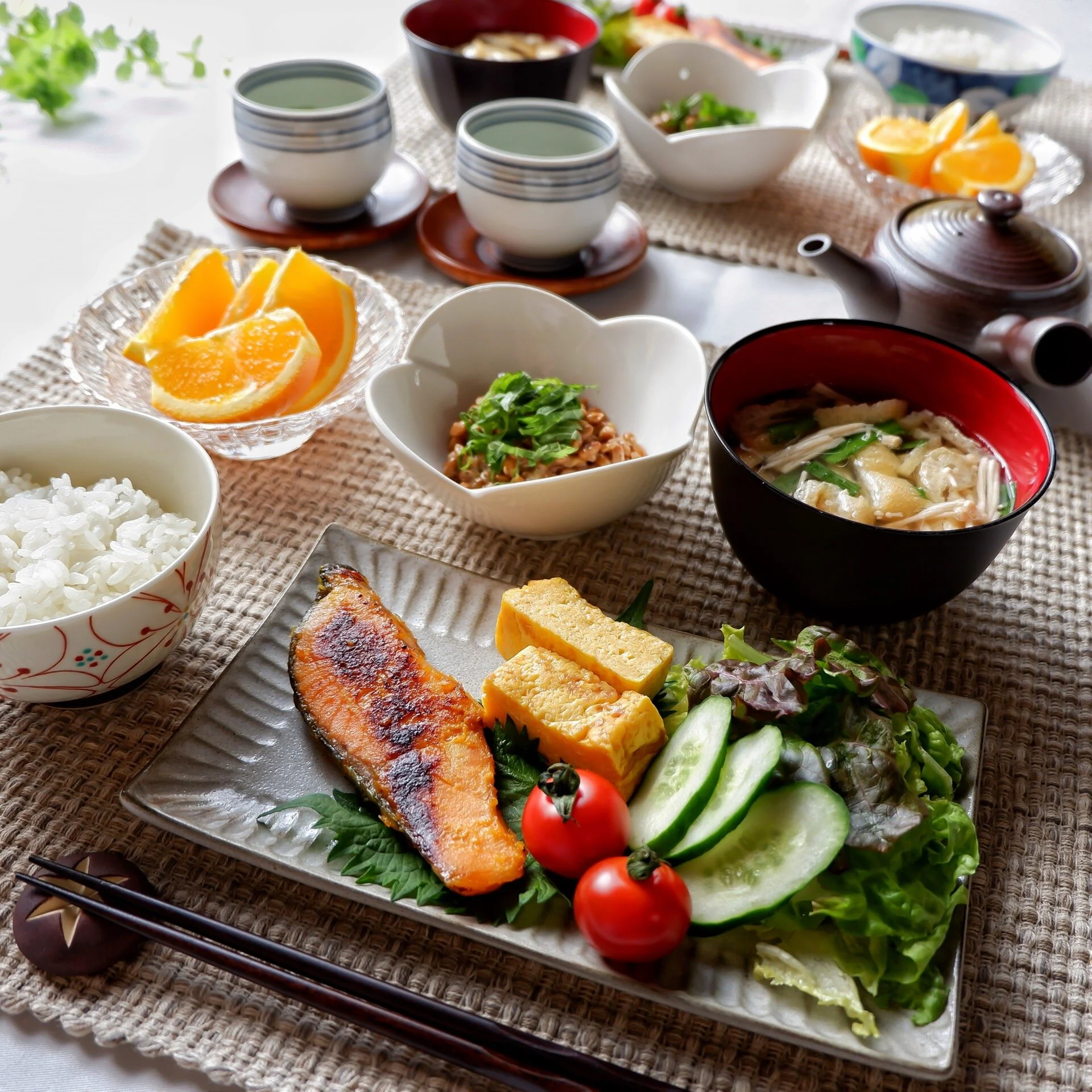
3. インクレチン分泌を高める「最強の和食御膳」メニュー例
これまでのメカニズムを1つの定食に落とし込んだ、理想的なメニュー例です。
※和食における調理の注意点(隠れ糖質の排除)
和食の「煮物」や「照り焼き」は一見ヘルシーですが、調味料として使われる砂糖、みりん、市販のめんつゆには大量の単純糖質が含まれています。これらがステップ1や2の段階で体内に入ってしまうと、せっかくの順番の効果が相殺されてしまいます。 調理の際は、エリスリトールや羅漢果(ラカントなど)といった血糖値を上げない天然由来の甘味料に置き換えるか、出汁(かつお・昆布)の旨味を強く効かせて塩や醤油だけでシンプルに味付けする工夫が、医療の観点からも非常に重要です。
結び:我慢から「賢い選択」の時代へ
現代の糖尿病・肥満症治療において、日本食は「選び方と味付けさえ間違えなければ、最強のロカボ・インクレチン誘発食になり得る」と言えます。
「白米を絶対に食べてはいけない」と排除するのではなく、お茶碗に軽く一杯(約100g〜120g:糖質約40g)にコントロールし、その前に青魚やワカメの味噌汁、大豆の煮物を食べる。この「食べる順番(カーボラスト)」を守るだけで、あなたの体内のインクレチンが働き出し、無理のない満腹感へと導いてくれます。
我慢の時代は終わりました。最新の医学知識をスパイスに、美味しく賢く、日本食のメリットを最大限に活かしていきましょう。
The era of pure asceticism in metabolic medicine is officially over.
For decades, managing type 2 diabetes and obesity felt like a secular penance: calculating rigid caloric deficits or enforcing draconian bans on carbohydrates. Patients were essentially asked to fight their own biology with sheer willpower—a strategy that clinical history shows almost inevitably ends in burnout and relapse.
Today, metabolic science has moved from the blunt instrument of starvation to the precision of endocrinology. The contemporary frontier of weight and glycemic management is defined by two converging concepts: “Locabo” (the practice of gentle carbohydrate restriction) and the mastery of incretins—the gut hormones that inspired the blockbuster weight-loss drugs (like GLP-1 receptor agonists) currently transforming global healthcare.
When we view traditional Japanese cuisine (Washoku) through this modern endocrinological lens, it emerges not as a monolith of white rice to be feared, but as a sophisticated, double-edged tool. Correctly navigated, it is a powerful ally for hormone optimization; misunderstood, it becomes a stealthy vector for metabolic dysfunction.
The New Frontier: Hormones Over Calories
To understand why Japanese cuisine is so relevant today, one must look at how modern medicine has redefined “fullness.” We now know that satiety is not merely a function of a stretched stomach, but a complex chemical cascade governed by incretins—primarily GLP-1 (glucagon-like peptide-1) and GIP (gastric inhibitory polypeptide).
Secreted by the intestines when food passes through, these hormones do not just prompt the pancreas to release insulin with exquisite timing; they actively signal the brain to turn off appetite and slow gastric emptying.
The goal of modern dietary therapy is no longer just to minimize input, but to biochemically trigger the endogenous release of these satiety hormones while preventing glucose spikes. This is where the Japanese diet, when optimized via “Locabo” principles (targeting a gentle 20–40g of carbs per meal), offers a startling clinical advantage.
The Incretin Engine: The Biological Perks of Washoku
At first glance, a cuisine centered around a bowl of polished white rice seems antithetical to metabolic health. Yet, traditional Japanese dietary architecture contains three distinct biochemical mechanisms that naturally stimulate the incretin system.
1. The Soluble Fiber Catalyst
A traditional Washoku table is heavily populated by side dishes (osazu) featuring seaweed (wakame, hijiki), konjac, mushrooms, and root vegetables. These are elite sources of soluble dietary fiber. As these viscous fibers pass through the lower digestive tract, they ferment into short-chain fatty acids, which directly stimulate the L-cells in the ileum to release GLP-1. This creates a sustained “second-meal effect,” dampening the blood sugar spike of subsequent meals hours later.
2. The Omega-3 Signal
The Japanese emphasis on blue-backed fish (aomono) like mackerel, sardines, and saury provides a high concentration of EPA and DHA (omega-3 polyunsaturated fatty acids). Cutting-edge gastroenterology reveals that these specific fatty acids bind to receptors in the gut lining, acting as potent secretagogues for incretin hormones. They deliver a high-fidelity satiety signal to the brain far more efficiently than the saturated fats found in Western red meats.
3. The Resistant Starch Loophole
The cultural habit of consuming rice at room temperature or slightly chilled—such as in sushi, traditional bento boxes, or onigiri—alters the physical structure of the carbohydrate. Cooling coaxes the starches into recrystallized forms known as resistant starch. Resistant starch evades digestion in the upper small intestine, effectively lowering the glycemic index of the meal and acting more like a prebiotic fiber that fuels the gut microbiome.
The Stealth Risks: Deconstructing the Washoku Illusion
However, romanticizing the Japanese diet can be a dangerous clinical error. Traditional Japanese cooking possesses systemic vulnerabilities that can quietly undermine metabolic health if left unmanaged.
+------------------+------------------------------------+------------------------------------+
| Traditional Element | Metabolic Risk                     | Locabo Adjustment                  |
+------------------+------------------------------------+------------------------------------+
| Mirin, Sugar,    | High "hidden" simple sugars        | Substitute with natural sweeteners |
| Tsuyu (Broth)    | causing hidden glucose spikes       | (e.g., monk fruit/erythritol)      |
+------------------+------------------------------------+------------------------------------+
| High Sodium      | Accelerates insulin resistance;    | Shift to umami-rich dashi;         |
| (Miso, Soy Sauce)| drives carbohydrate cravings       | load miso soup with solid greens   |
+------------------+------------------------------------+------------------------------------+
| One-Bowl Meals   | Pure carbohydrate and sodium;      | Enforce "Carb-Last" ordering;      |
| (Donburi, Udon)  | bypasses incretin triggers         | avoid isolated starch meals        |
+------------------+------------------------------------+------------------------------------+
1. The Trap of “Hidden Sugars”
The foundational flavor profile of many Japanese simmered dishes (nimono), teriyaki, and glazes relies heavily on a triad of soy sauce, mirin (sweet rice wine), and refined sugar. Because these sugars are woven into savory dishes, patients often consume large quantities of high-glycemic carbohydrates without realizing they are eating dessert-level sugars alongside their proteins.
2. The Sodium-Carbohydrate Snyergy
Washoku is notoriously high in sodium, driven by a heavy reliance on miso, soy sauce, and pickled items (tsukemono). Beyond the cardiovascular risks of hypertension, recent metabolic research suggests that high sodium concentrations in the gut can actually accelerate glucose absorption and stimulate a neurological desire for more carbohydrates—essentially driving the urge to eat more white rice to balance the salt.
3. The Erosion of Structure: The “One-Bowl” Sickness
The modern evolution of fast casual Japanese food—namely donburi (rice bowls) and refined wheat noodles (udon)—strips away the fiber- and fish-rich side dishes of traditional dining. What remains is a massive bolus of rapidly digestible starch and salt. Eaten quickly, it floods the bloodstream with glucose long before endogenous GLP-1 can rise to mitigate the damage.
The precise cellular and physiological mechanism of the ‘carbohydrate-last’ or ‘veggie-first’ eating sequence, and how it optimizes GLP-1 secretion.
The “vegetable-first, carbohydrate-last” eating sequence—often referred to in clinical literature as food order or nutrient sequencing—is no longer just a piece of casual dietary advice. It is a precise behavioral intervention that leverages gastrointestinal physiology to alter the pharmacokinetics of glucose absorption.
By strategically manipulating the order in which macronutrients enter the digestive tract, you can effectively trigger a robust, endogenous release of Glucagon-Like Peptide-1 (GLP-1) before glucose ever hits the bloodstream.
Here is the step-by-step cellular and physiological breakdown of how this mechanism works.
1. Gastric Emptying Rate: The Mechanical Brake
The fundamental physiological principle behind nutrient sequencing is the modulation of gastric emptying—the rate at which food leaves the stomach and enters the small intestine.
The Glucose-First Scenario: When simple carbohydrates or refined starches (like white rice or bread) are eaten first on an empty stomach, gastric emptying is rapid. Glucose is quickly dumped into the duodenum and upper jejunum, leading to a steep, immediate spike in blood glucose—a phenomenon known as a glycemic spike.
-
The Fiber/Protein-First Scenario: When dietary fiber (from vegetables) or proteins and fats (from fish or meat) enter the stomach first, they trigger mechanical and chemical receptors. Protein and fat stimulate the secretion of cholecystokinin (CCK) and peptide YY (PYY) from the gut lining. These hormones act on the vagus nerve to slow down gastric motility.
Consequently, by the time the carbohydrates are consumed (typically 10 to 15 minutes later), the stomach’s emptying rate has been heavily braked. The carbohydrates are trickled into the small intestine slowly, stretching out glucose absorption over a longer period and flattening the postprandial (post-meal) glucose curve.
2. Cellular Mechanism of Enhanced GLP-1 Secretion
GLP-1 is synthesized and secreted by neuroendocrine L-cells, which are predominantly located in the distal jejunum, ileum, and colon. L-cells are highly sensitive to the molecular components of digested food.
When nutrients are sequenced correctly, they optimize the cellular activation of these L-cells through distinct pathways:
A. Lipid and Protein Stimulation (The Chemical Trigger)
When fats and proteins are consumed before carbohydrates, they are broken down into free fatty acids, monoacylglycerols, and amino acids.
-
Fats: Free fatty acids bind to specific G-protein coupled receptors on the L-cell membrane, such as GPR119 and FFA4 (GPR120).
-
Proteins: Oligopeptides and amino acids stimulate the Calcium-Sensing Receptor (CasR) and peptide transporters on the L-cell.
Activation of these receptors triggers an intracellular signaling cascade that increases cyclic AMP (cAMP) and intracellular calcium. This influx of calcium forces the exocytosis (release) of stored GLP-1 vesicles into the bloodstream before systemic glucose levels rise.
B. The Fiber and Microbe Cross-Talk
Soluble fibers from vegetables form a viscous gel in the stomach and intestines. This gel slows down the transit of food, ensuring that macronutrients travel further down the intestinal tract to the ileum and colon, where the density of L-cells is highest. Furthermore, fermentation of these fibers by gut microbiota produces Short-Chain Fatty Acids (SCFAs) like acetate and butyrate, which bind to FFA2/3 receptors on L-cells, further stimulating sustained GLP-1 release.
3. The Downstream Cascade: Mitigating Beta-Cell Stress
Once GLP-1 is secreted endogenously by the L-cells via this sequence, it acts on the pancreas and brain to handle the incoming carbohydrates with maximum efficiency:
-
Incretin Effect Optimization: GLP-1 binds to GLP-1 receptors on pancreatic beta-cells. This primes the cells, so that when glucose does finally arrive in the small intestine, the beta-cells release insulin in a glucose-dependent manner. This first-phase insulin response is highly efficient, clearing glucose from the blood without over-secreting insulin.
-
Glucagon Suppression: Simultaneously, GLP-1 suppresses the secretion of glucagon from pancreatic alpha-cells. Since glucagon tells the liver to release stored glucose, suppressing it prevents the liver from adding unnecessary sugar to the bloodstream while you are already eating.
Summary of Clinical Outcomes
By simply waiting 10 to 15 minutes between the fiber/protein phase and the carbohydrate phase of a meal, the physiological profile changes entirely:
| Metric | Carbohydrate-First | Carbohydrate-Last (Veggie-First) |
| Gastric Emptying | Rapid | Significantly Delayed |
| GLP-1 Secretion Peak | Delayed & Blunted (Overwhelmed by Glucose) | Early & Sustained (Primed by Fats/Proteins) |
| Postprandial Insulin | Sharp, massive spike (leads to reactive hypoglycemia/cravings) | Smooth, lower peak (conserves beta-cell function) |
| Glucose Curve | Erratic “Spike and Crash” | Flat and Stable |
Ultimately, the “carbohydrate-last” sequence acts as a behavioral analog to a mild GLP-1 receptor agonist medication. It utilizes the body’s internal plumbing to naturally slow down digestion, maximize satiety hormones, and protect the pancreas from the exhausting workload of processing sudden glucose floods.
A practical 3-day Japanese-style meal plan
This practical 3-day meal plan is designed specifically around traditional Japanese cuisine (Washoku), tailored to optimize the endocrinological principles of nutrient sequencing.
To strictly adhere to the Locabo limit of 20–40g of carbohydrates per meal, the primary modification is the precise management of white rice. A standard bowl of Japanese rice (approx. 150g) contains about 55g of carbohydrates, which exceeds the limit. Therefore, this plan curates rice portions to exactly 70g–80g (approx. 25g of carbs), utilizing “cold-stable” preparation where possible, while aggressively scaling up soluble fiber and marine-derived Omega-3s.
Note on Sequencing: For every meal, eat the dishes in the order presented (Fiber $\rightarrow$ Protein $\rightarrow$ Carbohydrate last) with a short pause before the rice to maximize the incretin effect.
Day 1: The Coastal Incretin Starter
Focus: Maximizing marine soluble fiber and cold-formed resistant starch.
Breakfast
-
Fiber (First): Nameko Mushroom and Wakame Miso Soup. (Nameko mushrooms and wakame seaweed are exceptionally rich in soluble beta-glucans and fucoidan, forming a mucosal gel in the gut).
-
Protein/Fat (Next): Natto (1 pack) with Chopped Spring Onions. (Fermented soy protein provides a clean insulinotropic effect).
-
Carbohydrate (Last): 70g of Warm Brown Rice (or a 50/50 white rice and barley blend).
-
Estimated Carbs: ~26g | Omega-3: Minimal | Soluble Fiber: High
Lunch
-
Fiber (First): Chilled Okra and Shaved Bonito Salad. (The mucilage in okra is pure soluble fiber, slowing gastric emptying).
-
Protein/Fat (Next): Salt-Grilled Mackerel (Saba no Shioyaki). (One of the most potent sources of EPA/DHA available; a direct trigger for L-cell GLP-1 release).
-
Carbohydrate (Last): 70g of Chilled Rice (Prepared in advance and served at room temperature to maximize resistant starch).
-
Estimated Carbs: ~25g | Omega-3: ~2.5g | Soluble Fiber: Medium-High
Dinner
-
Fiber (First): Sunomono (Cucumber and Hijiki Seaweed Vinegar Salad). (Prepared using erythritol/monk fruit sweetener instead of sugar. The acetic acid in the vinegar works synergistically with fiber to delay gastric emptying).
-
Protein/Fat (Next): Sashimi Platter (Tuna/Maguro and Salmon). (Raw fish preserves the delicate structure of Omega-3 fatty acids from heat degradation).
-
Carbohydrate (Last): 80g of Konjac-Infused White Rice (White rice cooked with minced Mannan Hikari or konjac rice to bulk up volume while keeping carb counts low).
-
Estimated Carbs: ~28g | Omega-3: ~1.8g | Soluble Fiber: Medium
Day 2: The Umami & Fermentation Sync
Focus: Cultivating short-chain fatty acids (SCFAs) via root vegetables and blue-backed fish.
Breakfast
-
Fiber (First): Simmered Kiriboshi Daikon (Dried Radish) and Aburaage. (Stewed with a sugar-free dashi broth. Dried radish concentrates soluble fibers).
-
Protein/Fat (Next): Dashimaki Tamago (Japanese Omelet). (Whisked with a rich bonito dashi to maximize umami-induced satiety without adding sugar).
-
Carbohydrate (Last): 70g of Rolled Barley Rice (Mugi-gohan). (Barley contains high amounts of water-soluble $\beta$-glucan).
-
Estimated Carbs: ~24g | Omega-3: Minimal | Soluble Fiber: High
Lunch
-
Fiber (First): Grated Nagaimo Mountain Yam (Tororo). (Served over the rice at the very end, but its enzymes and soluble mucilage coat the digestive tract).
-
Protein/Fat (Next): Simmered Sardines in Ginger Dashi (Iwashi no Nimono). (Sardines provide both Omega-3s and calcium. Cooked with soy sauce and stevia/monk fruit to eliminate the hidden sugars of traditional mirin/sugar glazes).
-
Carbohydrate (Last): 70g of Rice.
-
Estimated Carbs: ~27g | Omega-3: ~2.0g | Soluble Fiber: Medium-High
Dinner
-
Fiber (First): Gobo (Burdock Root) and Konjac Kinpira. (Burdock is a powerhouse of inulin, a highly fermentable soluble fiber that directly fuels distal colon L-cells for delayed GLP-1 release. Cooked sugar-free).
-
Protein/Fat (Next): Tofu and Minced Chicken Hamburg Steak (Tofu Hambagu). (Blends lean protein with soy isoflavones).
-
Carbohydrate (Last): One Grilled Onigiri (75g rice portion), allowed to cool slightly.
-
Estimated Carbs: ~29g | Omega-3: Minimal | Soluble Fiber: Very High
Day 3: The Deep-Sea Satiety Protocol
Focus: Elite-level EPA/DHA loading and complex texturing.
Breakfast
-
Fiber (First): Mekabu Seaweed Slime. (Mekabu is the flowering sprout of wakame; its highly viscous soluble fiber wraps around glucose molecules in the gut, blunting the glycemic index of the entire meal).
-
Protein/Fat (Next): Grilled Salmon Fillet (Shake no Shioyaki). (Provides a dense dose of astaxanthin and Omega-3s).
-
Carbohydrate (Last): 70g of White Rice.
-
Estimated Carbs: ~25g | Omega-3: ~1.5g | Soluble Fiber: High
Lunch
-
Fiber (First): Shirataki Noodle and Spinach Ohitashi. (Shirataki noodles are pure glucomannan, a soluble fiber with near-zero calories that dramatically slows down stomach emptying).
-
Protein/Fat (Next): Boiled Squid or Octopus Salad with Miso-Vinegar (Nutari), sugar-free. (High-protein, low-fat seafood that forces extensive mastication, stimulating early cephalic-phase satiety signals).
-
Carbohydrate (Last): 70g of Barley-Mixed Rice.
-
Estimated Carbs: ~23g | Omega-3: Medium | Soluble Fiber: High
Dinner
-
Fiber (First): Dashi-Simmered Shiitake, Shimeji, and Maitake Mushrooms. (Mushrooms provide zero-glycemic soluble fibers that form the perfect “preload” carpet in the small intestine).
-
Protein/Fat (Next): Saury or Atka Mackerel (Hokke no Shioyaki). (A large, satisfying portion of healthy marine fats that maximizes late-phase PYY and GLP-1 secretion).
-
Carbohydrate (Last): 80g of Cold Sushi Rice (prepared with vinegar and a sugar substitute). (The combination of vinegar and resistant starch creates a uniquely low glycemic footprint for white rice).
-
Estimated Carbs: ~30g | Omega-3: ~2.2g | Soluble Fiber: Medium
Clinical Kitchen Rules for this Plan:
-
Exile the Mirin: Traditional Washoku uses mirin and refined sugar to create a glossy sheen (teri). In this plan, substitute these entirely with liquid or powdered erythritol/monk fruit blends, or rely strictly on concentrated kombu/bonito dashi broth for flavor flavor.
-
The 10-Minute Rule: Do not touch the rice bowl until at least 10 minutes have passed since your first bite of the fiber/protein components. This gives the mechanical and hormonal brakes in the stomach time to activate.
Conclusion: The Era of Smart Selection
The intersection of modern endocrinology and traditional Japanese cuisine reveals that Washoku is not a relic of the past to be discarded, but a sophisticated physiological toolkit.
The strategy is no longer to ban the rice bowl, but to master its context. By curtailing the portion of white rice to a modest 100-gram “Locabo” portion, replacing hidden cooking sugars with non-glycemic alternatives, and strictly adhering to a “fiber and protein first, carbohydrate last” eating sequence, patients can essentially mimic the effects of modern pharmaceutical therapies naturally.
The future of metabolic medicine does not require patients to abandon their culinary heritage. It simply requires them to outsmart it.